Express 24-hour turnaround available on all major services
80+ languages · Certified translators · Same-day delivery available
Home
About Us
Services
Translation In Qatar
Blogs
Career
Contact Us
IRELAND
Services Ireland Attestation

Ireland Certificate
Attestation in Qatar

DFAT Approved
MOFA Recognized
Door-to-Door
Fast Turnaround
Employment & Education

Degree Attestation

Essential for securing an employment visa or pursuing higher studies in Qatar.

1

Notary Public

Verification in Ireland

2

DFAT

Dept. of Foreign Affairs

3

Embassy

Qatar Embassy Dublin

4

MoFA Qatar

Final Stamp in Doha

Diploma
Vocational & High School

Diploma & School Certificates

Specialized attestation for Irish diplomas, QQI certificates, and Leaving Certificate documents to meet Qatar Ministry of Education guidelines.

Requirements:

  • Original Certificate
  • Final Year Transcript
  • Passport Copy
Family Residency

Marriage Certificate Attestation

Mandatory for applying for spouse visas and family sponsorships in Qatar.

To bring your family to Doha, your Irish marriage certificate must be authenticated through the proper channels. We manage the entire process seamlessly.

Process Details:

  • 1. Local Auth: Irish Notary Public.
  • 2. State Auth: DFAT Ireland Apostille/Authentication.
  • 3. Consular: Qatar Embassy in Dublin.
  • 4. Local: MoFA Qatar.

Timeline: 12 - 20 Working Days

Marriage cert

Birth & Death Certificates

Required for school admissions, insurance claims, and legal procedures.

Stage 01: Local Verification

Authentication by a Notary Public in Ireland.

Stage 02: DFAT Ireland

Department of Foreign Affairs and Trade verification.

Stage 03: Embassy Approval

Consular stamp from the Qatar Embassy in Dublin.

Stage 04: MoFA Doha

The final legalization step in Qatar.
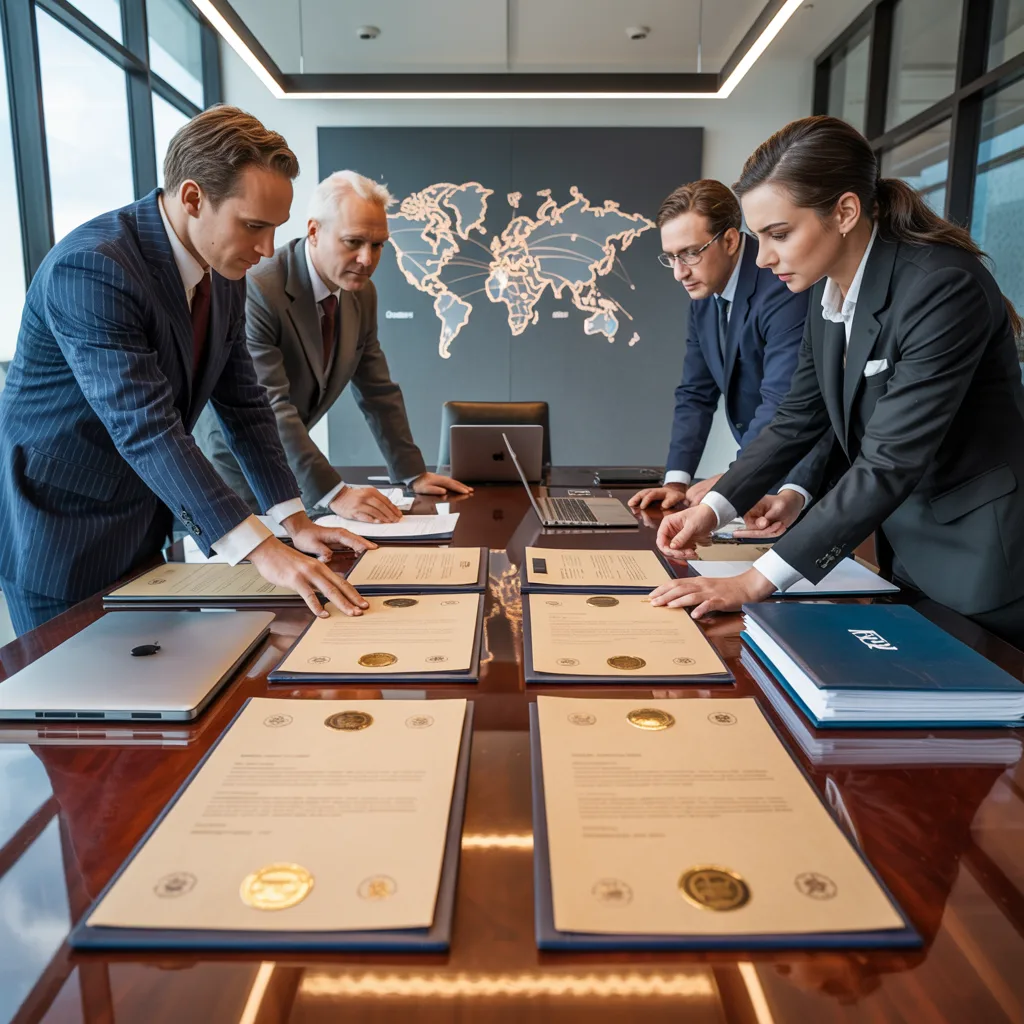
Business docs
Business Legalization

Company Documents

Commercial document attestation is crucial for Irish businesses setting up branches or entering into joint ventures in Qatar.

CRO Extracts / CoO
MoA / AoA

Power of Attorney (POA)

Authorizing someone in Qatar for property, banking, or legal matters? Your Irish POA must undergo full legalization to be accepted by Qatari courts and financial institutions.

Note: Original documents and passport copies are mandatory. Arabic translation may be required post-MoFA.

Legal poa

Processing Time & Requirements

12-20 Days

Routine Processing timeframe

Originals

Original doc, Passport copy & Transcripts

Translation

Must be stamped by professional translator

Urgent

Express attestation options are available

Why Choose Hiremate Services?

13+ Years Experience

International certificate attestation experts.

Direct Coordination

Working directly with DFAT and Qatar embassies.

Door-to-Door

Pick-up & Delivery across Ireland & Qatar.

Transparent Pricing

Clear costs with no surprise fees at any stage.
Who can use our service?

Job Seekers Students Families Entrepreneurs Law Firms

FAQ

1. What is Irish certificate attestation?
It is the process of legalizing Irish documents to be legally accepted in Qatar for employment, study, business, or immigration.
2. Do I need translation for Irish documents?
Most official English documents may require Arabic translation depending on the submitting authority in Qatar. We handle necessary legal translations.
3. Is Chamber of Commerce needed?
Only for commercial documents like invoices and agreements, not for personal or educational certificates.
4. What is the processing time?
Typically 12 to 20 working days, depending on the document type and department timelines.
5. Do I need to visit Ireland?
No, you can simply hand over your original documents to us in Qatar, and we handle the end-to-door process in Ireland.
6. What is the role of the DFAT?
The Department of Foreign Affairs and Trade (DFAT) provides the state verification required before the Qatar Embassy can attest the document.
7. Is Qatar Embassy stamping required?
Yes, legalization by the Qatar Embassy in Dublin is a mandatory step.
8. What is the final step?
Final stamping by the Ministry of Foreign Affairs (MoFA) in Doha, Qatar.

Ready to Certify?

Let the experts handle your Qatar attestation needs.

Chat on WhatsApp
EXPERT ANSWERS

Frequently Asked Questions for Ireland Translation

Find answers to the most common questions about our professional translation services. This section is written to help users understand the process, requirements, turnaround time, acceptance, and quality standards before they place an order.

It is the professional conversion of content from one language into or from another target language while preserving meaning, tone, and legal accuracy. It is commonly required when you need to submit official, educational, business, immigration, medical, or personal documents to authorities, universities, embassies, employers, or private institutions.

Many people need translation services for certificates, mark sheets, passports, birth certificates, marriage certificates, agreements, affidavits, contracts, company documents, visa files, and application papers. A properly translated document helps prevent misunderstandings, delays, rejections, and compliance issues. If your document contains names, dates, seals, signatures, or legal terminology, it should always be translated carefully by professionals who understand the required format and official use.

We can translate a wide range of documents used for personal, academic, legal, corporate, and government purposes. Common personal documents include birth certificates, marriage certificates, divorce papers, passports, police clearance certificates, medical reports, and death certificates. Academic documents include school certificates, transcripts, diplomas, provisional certificates, and degree records.

We also handle business and legal content such as memorandums, powers of attorney, contracts, agreements, commercial invoices, incorporation papers, board resolutions, financial documents, court papers, and compliance records. For clients applying abroad, we regularly translate visa support documents, immigration papers, embassy submission files, and employment documents. Before translation starts, each file is checked for clarity, completeness, and intended use so the final output matches the requirement of the receiving authority or institution.

Accuracy is one of the most important parts of professional translation, especially when documents are submitted for legal, academic, immigration, or embassy purposes. Our translation process focuses on linguistic precision, correct terminology, proper spelling of names, formatting consistency, and the exact transfer of dates, numbers, stamps, and official references wherever required.

Acceptance depends on the receiving organization and the country where the document will be used. Some authorities accept standard professional translations, while others ask for certified translation, notarization, or additional authentication. For that reason, it is always important to confirm the exact requirement in advance. We prepare translations in a professional structure suitable for official submission and guide clients on whether any extra attestation, notarization, or supporting declaration may be necessary for their specific purpose.

Turnaround time depends on the number of pages, type of content, complexity of language, urgency, and whether the document contains technical, legal, or handwritten material. In many standard cases, translation can be completed within a short timeframe, especially when documents are clearly scanned and submitted in a readable format.

Urgent translation options may also be available for clients who need fast processing for visa submission, embassy appointments, university deadlines, or business transactions. However, speed should never compromise quality. Every document still requires review for completeness and correctness before delivery. The best approach is to share the files, expected deadline, and intended use in advance so the process can be planned properly and the delivery commitment can be realistic.

The process usually begins when you send your documents through WhatsApp, email, or the website inquiry form. After reviewing the file quality, document type, and language pair, the team shares the scope, expected delivery timeline, and any formatting or certification options relevant to your case.

Once confirmed, the content is assigned for translation and then checked for consistency, terminology, spelling, formatting, and overall readability. If the translation is meant for official submission, special attention is given to names, numerical data, seals, dates, addresses, and document structure. After review, the translated copy is delivered digitally and, where applicable, physical copies or additional processing support can also be arranged. This clear workflow helps reduce errors and keeps the process transparent for the client.

Many clients need more than a simple translated file. Depending on the destination country or institution, they may also require certified translation, notarization, attestation, or document legalization. These requirements are common for immigration, overseas employment, embassy submission, legal use, and higher education applications.

Translation and attestation are related but separate processes. Translation converts the content into the required language, while attestation or notarization validates the document for official acceptance. If your file needs further processing after translation, it is important to mention this at the start. That allows the work to be prepared in a way that supports the next step smoothly. A coordinated workflow helps avoid repeat work, format mismatch, and last-minute submission problems.

Translation pricing is usually based on the type of document, number of pages, word count, content complexity, language pair, urgency, and whether the file requires formatting, certification, or special handling. A simple certificate may be priced differently from a multi-page legal agreement or technical manual because the effort, terminology review, and formatting requirements are not the same.

Scanned image quality also matters. Poor scans, handwritten content, seals, and mixed language text often require extra care before the final version is produced. The most accurate way to receive a quotation is to share the documents in advance. Once the file is checked, the scope can be evaluated properly and the pricing can be aligned with the exact work required instead of making a rough estimate.

Yes, urgent translation support is often requested for time-sensitive cases such as visa applications, embassy appointments, immigration submissions, overseas employment, and university admissions. When a deadline is short, the first step is to review the document set and understand exactly what must be delivered, in what language, and by when.

Fast processing is possible only when the source files are clear and complete. If multiple documents are involved, it helps to prioritize them in the correct order. Even for urgent work, quality checks remain necessary because any small inconsistency in names, dates, reference numbers, or legal wording can create avoidable issues during submission. Sharing your timeline early helps determine whether a same-day or priority workflow can be arranged responsibly.

Confidentiality is essential because translation projects often include sensitive information such as passport data, personal certificates, academic records, legal papers, medical files, and company documents. A professional workflow should protect document privacy, limit unnecessary sharing, and ensure that files are handled carefully throughout the project.

Clients should always share documents only through trusted communication channels and make sure that all pages are complete before the work begins. It is also good practice to inform the service provider if the document has strict privacy requirements or if it will be used in litigation, internal corporate matters, or official compliance filings. A disciplined process helps maintain confidentiality while still allowing translation, review, and delivery to be completed efficiently.

A reliable translation service should offer more than just language conversion. It should provide clarity, consistency, proper formatting, responsive support, and a process that matches the client’s purpose. Whether the document is for personal use, legal filing, immigration, embassy submission, or corporate communication, the translation should be easy to understand and professionally structured.

Clients usually prefer a service that is responsive, detail-oriented, and familiar with official document handling. Strong communication, realistic timelines, careful review, and guidance on certification or attestation needs make the experience smoother and more dependable. When translation is done correctly the first time, it saves time, reduces stress, and increases confidence at the submission stage.